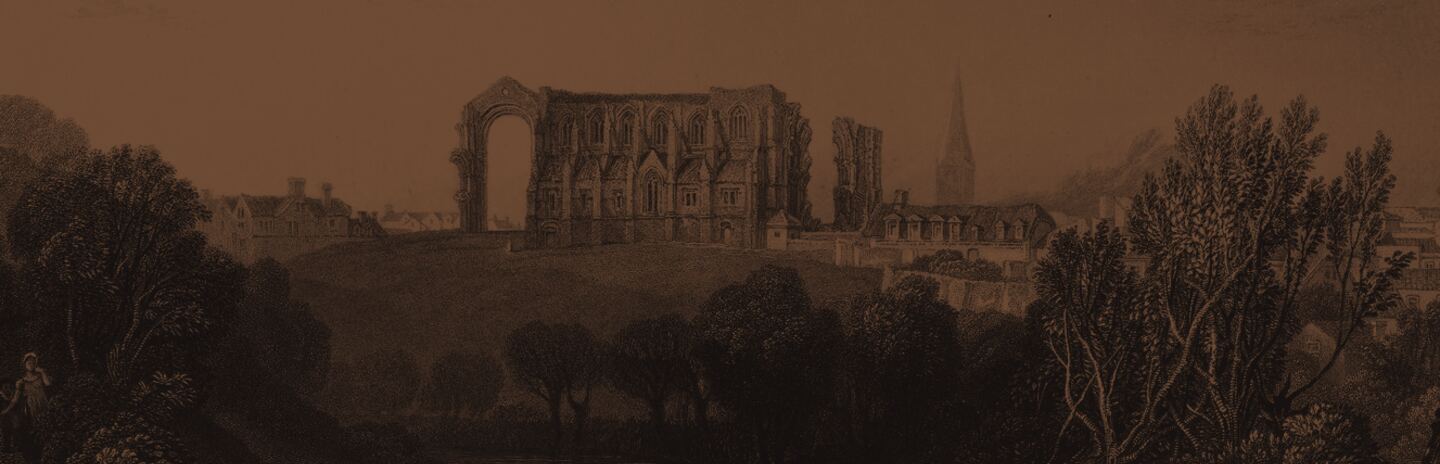

In the winter of 878 Alfred of Wessex had lost nearly everything. A Danish army under Guthrum had taken Chippenham in January, in the middle of the twelve days of Christmas, when nobody expected to be fighting. The West Saxon army scattered. The king went into the Somerset levels with a small following and spent the winter on Athelney, an island of dry ground in the marshes.
The story everyone remembers from those months is the cakes: the king, in hiding, given the job of watching bread on a hearth, and scolded for letting it burn. It is a good story. It is also a later one, first written down about a century afterwards, and it is probably not true. The part that matters is what he did next.
What he did next
In the spring he raised the levies of Somerset, Wiltshire and Hampshire, met Guthrum at Edington, and won. The peace that followed had Guthrum baptised, with Alfred standing as his godfather, and the Danish army leaving Wessex. That much is a battle, and battles are the least interesting thing about the reign.
The interesting part is the building. Alfred laid out a network of fortified places, the burhs, garrisoned and provisioned in a fixed proportion to the length of wall each had to hold. The arrangement is set out in a document called the Burghal Hidage, and its practical effect was that almost nowhere in Wessex was more than a long day’s walk from somewhere defensible. Several of those places are still towns with their street plans more or less intact.
He also thought the kingdom had forgotten how to read. So he had books he judged most necessary translated out of Latin into English, Gregory the Great’s Pastoral Care among them, and sent copies to his bishops. He had a share in that work himself, by his own account. And he issued a law code, a domboc, which sets out its own sources and its own reasoning rather than simply commanding.
None of this made him a modern figure. He was a ninth-century king with a ninth-century idea of what a king was for, and the sources we have for him are largely written by people in his own household. But the pattern is clear enough, and it is a good pattern: when everything had gone wrong, he did not build a bigger army. He built places people could get to, wrote things down in a language people could read, and left a record of how it was all supposed to work.
What that has to do with us
Albient is a small platform: mail, code, chat, files and a few other things, run from Wessex on machines in London, with a second copy of everything in Falkenstein. It is not a kingdom and we are not rebuilding one.
What we take from the story is the manner of it. Be present without getting in the way. Put the thing that governs you in a language people can read: every piece of software here is open source, and so is our configuration of it, published on Hord for anyone to go through. Keep nothing about people that you would not want to have to explain. And be somewhere with a name on the door, run by people you can write to, rather than a support form that answers nobody.
That is the whole of the claim. The rest is in the charter, and the parts we have not built yet are marked as such.